Farm Stay in the Negev Desert: Alpaca Farm in Mitzpe Ramon
Alpaca Farm stands in the Har HaNegev hills at Mitzpe Ramon, and that address says most of what a farm stay in the Negev desert means here. Around you is high, open desert, a short drive from the largest of the Negev’s craters. Inside the gate is a working family farm with alpacas, llamas, horses and a wool factory. We invite you to arrive slowly, because this is a place that rewards slowing down.
Where the farm sits: Har HaNegev, a short drive from Mitzpe Ramon
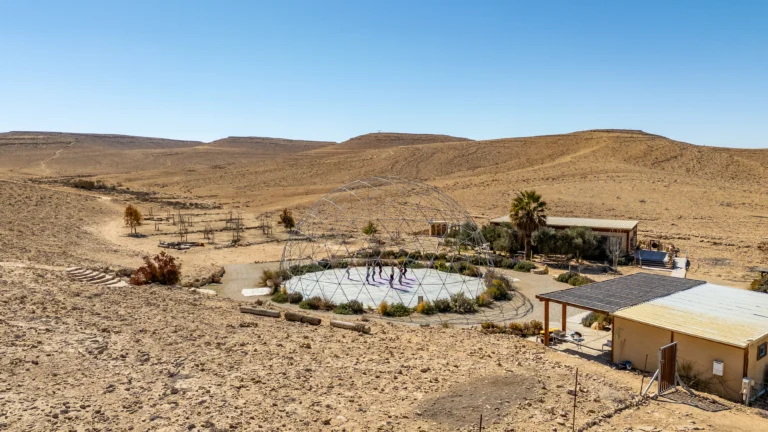
The farm is in Mitzpe Ramon, in the heart of the Negev, a short drive from the town itself. It is easy to reach by road, yet cut off from the noise of the city, and that quiet is part of why people come. The yurts look out over Ramon Crater, the largest of the Negev’s craters and the first international dark-sky reserve in the Middle East. From the farm it is about seven minutes by car.
Beyond the crater the desert opens up in widening rings. The Ammonite Wall is about fifteen minutes away, and the Minsara is a quarter of an hour. Nahal Havarim and Bor Hemet are each 25 minutes from the farm, and the Western Border Road and the Luz cisterns are about forty minutes out. That is enough variety for several days of wandering, and each evening you return to the same hillside.
Several easy walking trails start at the farm itself and lead to viewpoints, so some of the desert can be reached on foot without getting in the car. There is no public transport to the farm. Guests can walk from Mitzpe Ramon or take a taxi, and it is worth planning the journey before you set out.
A Negev farm stay with almost forty years behind it
Ilan and Naama Dvir founded the farm, and it has raised alpacas for their wool since 1987. The alpacas and llamas were brought to Israel from the Andes in South America. They are cousins from the camel family who share a distant ancestor. The llamas carried loads across mountain ridges for generations, while the alpacas were prized for soft, luxurious fleece that people were already weaving into special fabrics in the time of the Inca.
Today the farm is home to about 250 animals: alpacas, llamas, goats, horses, donkeys, dogs, ducks and a camel. It is a small family farm that keeps things personal, and it describes itself as a place with a soul, real animals and real nature, not a set designed for photographs. A stay here carries that same spirit.
Days on the farm: feeding, wool and tours on the hour
Guided experiences run at every full hour, and they include a visit to the factory where alpaca wool is processed and made. Few places show the whole journey in one spot, from the animal to the sweater. The farm is also described as the only boutique farm outside America where every stage of production happens under one roof.
Visitors learn how alpacas differ from llamas and feed the animals from the palm of the hand. Each visitor receives a feeding bag as part of the entrance ticket, and extra bags cost 5 NIS. Children can feed, stroke and photograph the alpacas, and there are craft corners for them as well. Parents have coffee and rest corners, shaded seating, and a stone cabin where you can sit with a drink or an ice cream.
The wool itself is worth a few minutes of attention. Alpaca fleece is not dyed: it comes in four base colours and 32 natural shades in between, and it weighs about half as much as sheep’s wool. It suits sensitive skin, babies included, because it contains little lanolin and no dander. The farm shearing happens each year when spring arrives, and the shop sells scarves, hats, gloves and socks on activity days.
Hands-on wool crafts, dry or wet felting, are available throughout the day. They carry an extra fee, places are limited and tickets should be booked in advance. Guests of the farm receive 10% off activities.
Where you sleep on the hillside: yurts, chalets and suites
The yurt village has ten Mongolian yurts, each about 30 square metres and sleeping up to five. Every yurt has made-up beds, air conditioning and heating, a private toilet and sink, warm lighting and hammocks outside. At the entrance sits a pergola with a private seating corner. Towels are provided, and from the yurts you look out toward Ramon Crater.
The wider compound has a large, equipped kitchen with a household-size fridge, so guests can cook for themselves, along with shower and toilet stalls, fire-pit corners and a large practice studio. At its heart is the geodesic dome, used for gathering and movement.
Families who want something more like a house can choose the chalets and suites on the mountainside, which overlook the farm. The Alpaca and Llama chalets are 29 square metres with a 14 square metre balcony. The Raz and Yael suites measure 44 to 50 square metres with a large balcony, and they sleep up to six guests in Raz or nine in Yael. Chalets have a living area and a combined bedroom, and the suites have a separate bedroom. All units can be heated and cooled.
Evenings in the Negev: fire, sky and quiet
When the visitors leave and the day softens, the desert takes over. The farm offers guided stargazing with professional telescopes, with explanations of what you are looking at, and this is a good place for it given the dark-sky reserve nearby. Some evenings include talking circles facing a desert sunset, or an evening of local boutique cheeses, Israeli boutique wines and a fire.
Each of the lodging areas has a private fire area, though barbecues and open-fire grilling of meat are not allowed. If music is part of the plan, quiet instrumental music is possible, but amplified music is not. Anyone who has ever stood in the Negev at dusk will recognise why.
Staying longer: retreats and groups
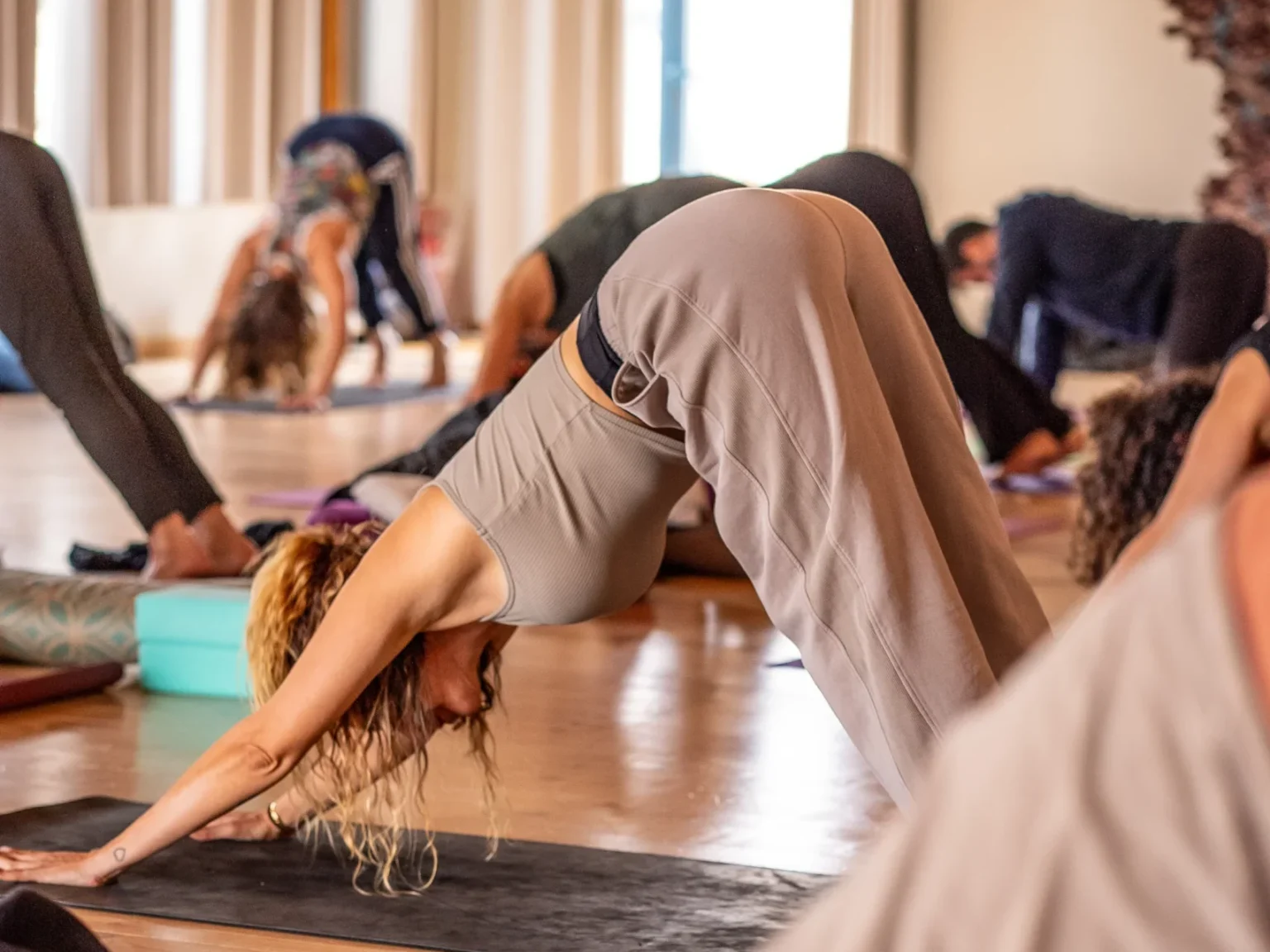
The farm has a retreat centre that hosts yoga, meditation and workshop weekends led by teachers from Israel and abroad. Retreats of two to four days can be arranged, and the compound is set up for groups of 20 to 60 participants depending on the type of hosting. Practice takes place in the studio, which has a wood floor, or under the open sky, and the alpacas and llamas are part of the experience.
For retreat and workshop enquiries, call 051-2998460 or write to [email protected]. For general questions, the farm’s number is 08-658-8047 and the email is [email protected].
Booking a farm stay in the Negev desert: what to know before you arrive
Check-in runs from 15:00 to 19:00 and check-out is by 11:00 on the day of departure. The practical details most guests ask about, such as minimum nights, payment, children, dogs and opening hours, are answered below.
Frequently asked questions
Can I visit Alpaca Farm in Mitzpe Ramon for the day without sleeping there?
Yes. Alpaca Farm in Mitzpe Ramon is open to visitors on Thursday, Friday and Saturday from 09:00 to 18:00, and on Sunday from 09:00 to 16:30. During school holidays it is open every day, and from 1 August 2026 it is open daily from 09:00 to 18:00 for the summer break. In winter time the farm closes at 16:30, and the last entry is half an hour before closing. You do not need to book a visit ahead of time, except for groups of more than 30 people.
Can we bring our dog to the farm?
No. Dogs and other animals cannot be brought into Alpaca Farm, and this also applies to the dome. For a service dog, contact the farm office to arrange entry.
How do we get to the farm without a car?
No public transport runs to Alpaca Farm in Mitzpe Ramon. You can walk there from the town of Mitzpe Ramon or take a taxi. Guests who arrive by car can park next to their lodging unit, and day visitors park outside the gate.
What are the minimum stay and payment rules for a farm stay in the Negev desert at Alpaca Farm?
On weekends and holidays the minimum booking at Alpaca Farm is two nights. Payment is made at check-out, and American Express is not accepted. Prices on the farm’s own website include VAT, whereas Booking.com shows them without it.
Is the farm suitable for families with babies and young children?
Yes, the farm offers safe, hands-on activities for young children too. Children under 2 enter free and pay no lodging fee until age 2, at which point both apply. A crib for a baby can be requested. Children under 8 must be accompanied by an adult in the craft activities.
Is Alpaca Farm accessible for wheelchairs and strollers?
Yes, the farm is accessible to wheelchairs and strollers. There are also several shaded seating corners, and the cabin has tables in an enclosed space and two shaded pergolas.
Is there Wi-Fi and mobile reception on the farm?
There is mobile reception and Wi-Fi, although reception is occasionally patchy. A stay at Alpaca Farm is better planned around the desert and the animals than around constant connection.
Are the wool and felting activities included in the entrance ticket?
No. The entrance ticket includes a feeding bag and the guided experiences, but wool crafts such as dry or wet felting cost extra. Places in the activities are limited, so tickets should be booked in advance. The activities suit all ages, and children under 8 should be accompanied by an adult.
Can we pitch our own tent at Alpaca Farm?
No. Camping is not possible at Alpaca Farm, and lodging is available only in its designated areas: yurts, chalets, suites and, for groups, the dome and the studio. Anyone who wants to sleep outdoors in style can ask about the farm’s glamping tents.