Alpaca Wool Felting Workshop in Mitzpe Ramon, at Alpaca Farm in the Negev
An alpaca wool felting workshop at Alpaca Farm begins with the drive: out to Har HaNegev, to Mitzpe Ramon, where the air is dry, the horizon is wide and the pace drops without anyone asking it to. We invite you to arrive unhurried, wander among the animals for a while, and only then sit down to work with the wool those animals give.
Where the felting happens: Har HaNegev, above the crater
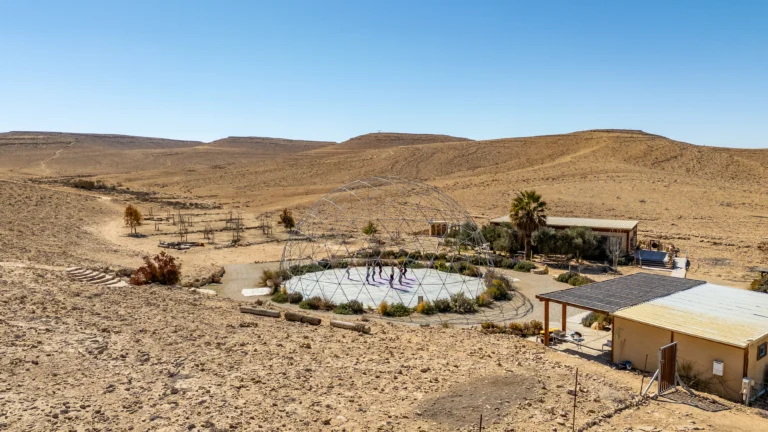
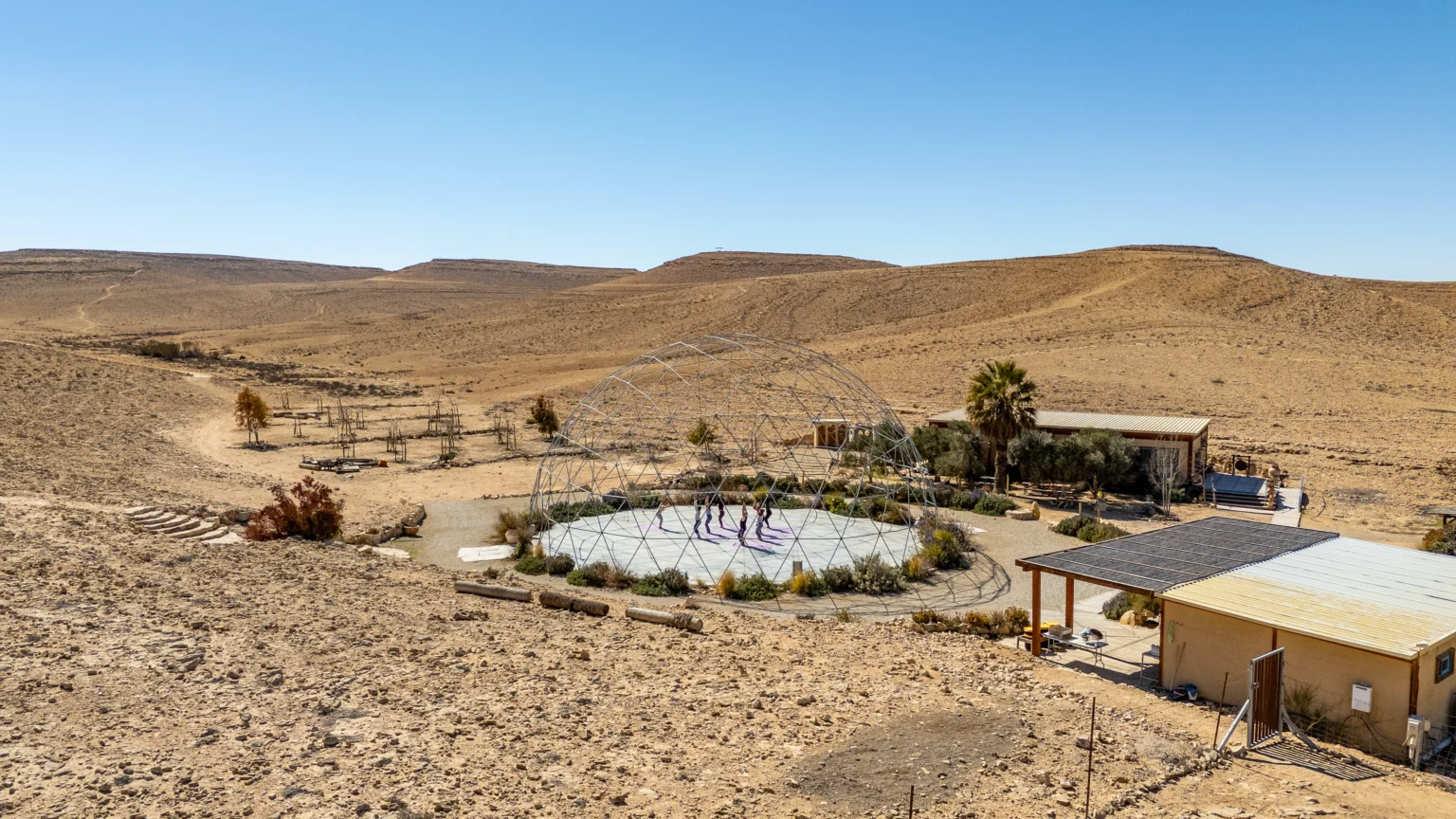
Alpaca Farm sits on Har HaNegev in Mitzpe Ramon, a short drive from the town itself. It is close to the main roads yet cut off from city noise, and it is accessible to wheelchairs and strollers. No public transport reaches the gate, but you can walk from Mitzpe Ramon or take a taxi, and anyone arriving by car parks outside the gate in the day-parking area.
Makhtesh Ramon is about seven minutes away by car. It is the largest of the Negev craters and also an international dark sky reserve, the first in the Middle East. A felting table here has the sky as part of its setting, almost as much as the ground.
What lies around the farm: crater, ammonite wall, springs and wells
A full day can be built around the workshop rather than the other way round. Several easy walking trails leave the farm for viewpoints, and a number of places sit within driving distance:
- Makhtesh Ramon: about 7 minutes by car
- The Minsara: a quarter of an hour by car
- The Ammonite Wall: about 15 minutes by car
- Nahal Havarim and Bor Hamat: 25 minutes each
- The Western Border Road and Burot Luz: 40 minutes each
The order most guests find easiest is simple: a morning or afternoon at the farm with the wool and the herd, then a short drive to the crater or the Ammonite Wall while your fingers still remember the fibre.
From the Andes to the table: the wool behind the craft
The farm was founded by Ilan and Naama Dvir, and it has raised alpacas for their wool since 1987, close to forty years. The alpacas and llamas were brought to Israel from the Andes in South America, where respect for this fibre runs deep: as far back as the Inca period, special cloth was woven from alpaca fleece.
A few things worth knowing before you pick up a tuft. The wool is not dyed, so the shades you see are natural: four base colours and 32 in-between tones. Alpaca wool weighs about half as much as sheep’s wool, and it suits sensitive skin, babies included, since it holds little lanolin and no dander. Shearing happens once a year, as spring arrives.
The farm is also one of the very few places where you can follow the whole production process in one spot, from the alpaca to the sweater. It describes itself as the only boutique farm outside the Americas where every stage of production happens under a single roof. A felting session here is not an isolated stop but one chapter of a complete story.
Dry or wet felting: what the workshop offers
At the farm you can try two ways of working wool, dry felting and wet felting, and the activities are available throughout the day, so the visit does not have to hinge on a single time slot. They suit all ages, and children under 8 join with an adult beside them. That makes the workshop a natural fit for families, and wool and craft workshops are part of what the farm offers them.
Two things to know in advance. Wool-processing activities carry an extra charge on top of admission. And places are limited, and tickets must be booked ahead.
Before and after the workshop: the hourly tour, the wool factory and a bag of feed
Guided tours run on every full hour and include a visit to the wool processing and production plant. It is the clearest way to see what the fibre goes through before it reaches your hands. There is also a wool house where you learn how alpaca wool is made, and an amphitheatre where the farm’s story is told.
The farm is home to roughly 250 animals, among them alpacas, llamas, goats, horses, donkeys, ducks and a camel. Every visitor receives a feed bag as part of the admission ticket, and extra bags cost 5 ₪. Feeding from the palm of your hand is the moment when children, and plenty of adults, slow down without being told to.
In the wool shop, on activity days, you can buy alpaca wool scarves, hats, gloves and socks. The stone cabin is a place to rest with drinks and ice cream, and there are several shaded seating corners where you can eat food brought from home.
Staying the night: yurts, chalets and suites on the hillside
Those in no rush to leave can sleep at the farm. The yurt village has ten yurts, each for up to five people, about 30 square metres, with air conditioning, heating, a private toilet and sink, a pergola and seating area at the entrance, and a view toward Makhtesh Ramon. The chalets and suites, from 29 to 50 square metres, sit on the hillside and look out over the farm.
Check-in is between 15:00 and 19:00, and check-out is by 11:00 on the day of departure. On weekends and holidays the minimum booking is two nights. The farm does not serve meals, but there is an equipped kitchen for self-catering, so supper after a day with wool is yours to cook.
Groups and retreat organisers fold felting into their programmes too: a felting workshop with alpaca wool is one of the contents that can sit alongside stargazing, yoga and a tour. To arrange a group stay or retreat, call 051-2998460 or write to [email protected].
Before you arrive: hours, tickets and what to know
The farm is open to visitors Thursday, Friday and Saturday from 09:00 to 18:00, and Sunday from 09:00 to 16:30. During school holidays it opens every day, and in the summer holiday, from 01.08.26, daily from 09:00 to 18:00. On winter time the farm closes at 16:30, and last entry is half an hour before closing.
You do not need to arrange a visit in advance unless your group is over 30 people. The workshop itself, as noted, is worth booking first. Dogs and other animals cannot enter the farm; to arrange entry with a service dog, contact the office. For general questions: 08-658-8047 or [email protected].
Frequently asked questions
Is the alpaca wool felting workshop included in the admission price at Alpaca Farm?
No. Admission to Alpaca Farm in Mitzpe Ramon includes a feed bag, but wool-processing activities, dry or wet felting, cost extra.
What age can children join a felting workshop?
The activities suit all ages. Children under 8 need an adult with them throughout, which is why the workshop works well for families arriving together.
Do I need to book a wool felting workshop ahead, or can I just turn up?
Visiting the farm needs no advance arrangement, except for groups over 30 people. But places in the activities are limited and tickets must be booked ahead, so it is wise to secure your spot before you travel.
Which days and hours can I do a felting workshop at Alpaca Farm?
The farm is open Thursday to Saturday 09:00-18:00 and Sunday 09:00-16:30, and every day in school holidays. Wool activities are available throughout the day, and last entry is half an hour before closing. On winter time the farm closes at 16:30.
Can a felting workshop be part of a retreat or group stay?
Yes. A felting workshop with alpaca wool is one of the contents that can be built into a retreat or group stay at Alpaca Farm on Har HaNegev. To arrange it, call 051-2998460 or write to [email protected].
How do I reach the farm without a car, and are the hours different at Sukkot?
Public transport does not reach the farm, but you can walk from Mitzpe Ramon or take a taxi. During Sukkot the hours are 09:00-18:00, and until 14:00 on the eve of the holiday, with last entry half an hour before closing.
Are there discounts, and is there guiding in English?
There is a discount for soldiers, security forces, retirees, people with disabilities and students, and children under 2 enter free. English guiding is not fixed but is offered by prior arrangement, and the farm’s information signs are in Hebrew and English.